
DropQ
Queue the hype.
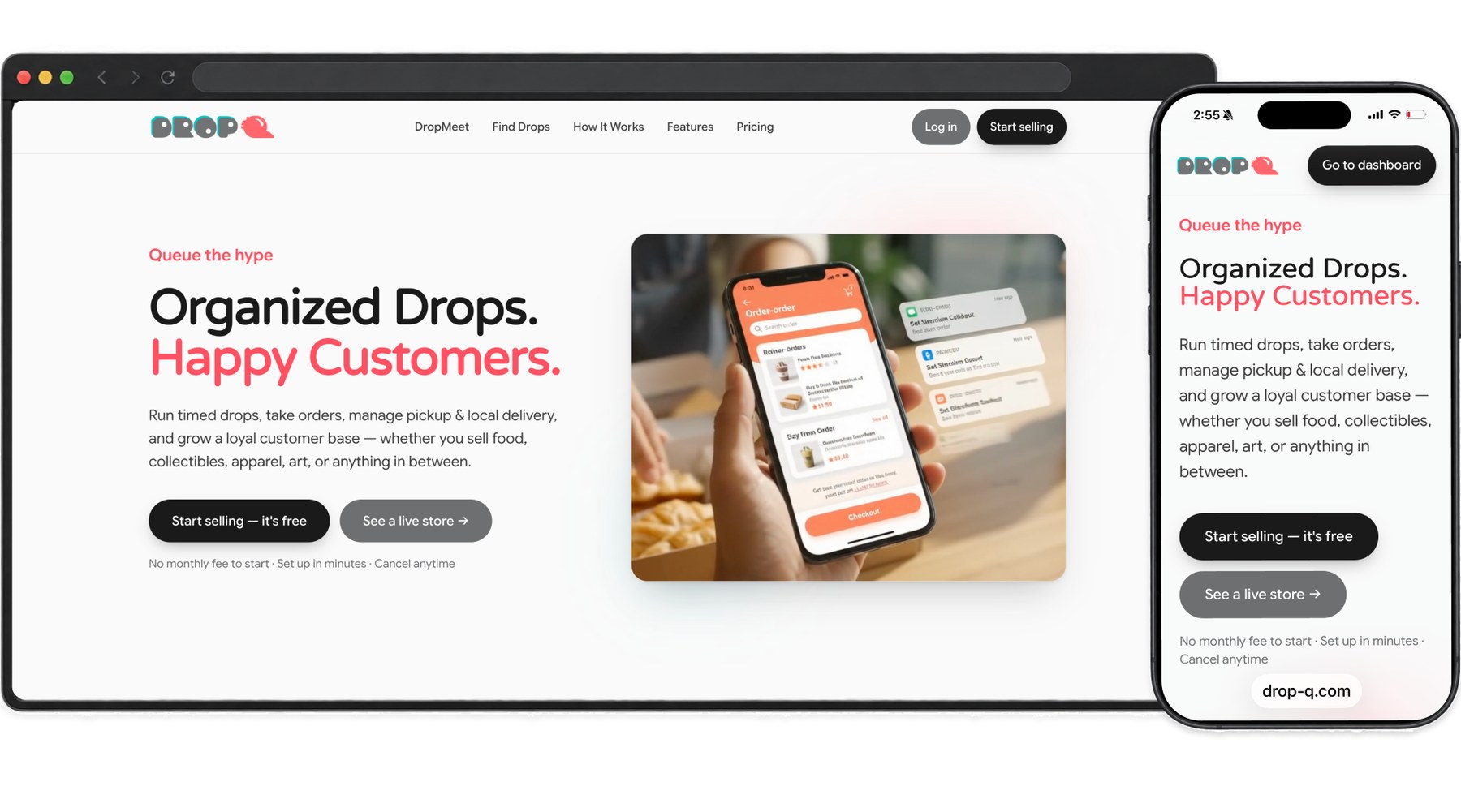
- Problem
- Independent sellers run limited drops across a form, a payment app, a spreadsheet and a group text. The stack holds until a drop goes viral, then it fails at the worst possible moment.
- My role
- Founder. Product strategy, UX, information architecture and UI, and the front-end build. I designed and built the app, working with AI through the development.
- Key decisions
- Make inventory that cannot oversell the centre of the product rather than a setting, give the seller a customer list they own, and add a messaging stream once the first real drop showed vendors and customers had nowhere to talk.
- Result
- A live platform with seven vendors selling on it, taken from problem to production by one person.
- 7vendors live on the platform
- End to endstrategy, design and front-end
- Shippedtimed drops, inventory, messaging
Overview
Independent sellers run limited drops on a stack of apps that do not talk to each other: a form for orders, a payment app, a spreadsheet, a group text. DropQ replaces that with timed releases, inventory that cannot oversell, and a customer list the seller actually owns.
The problem
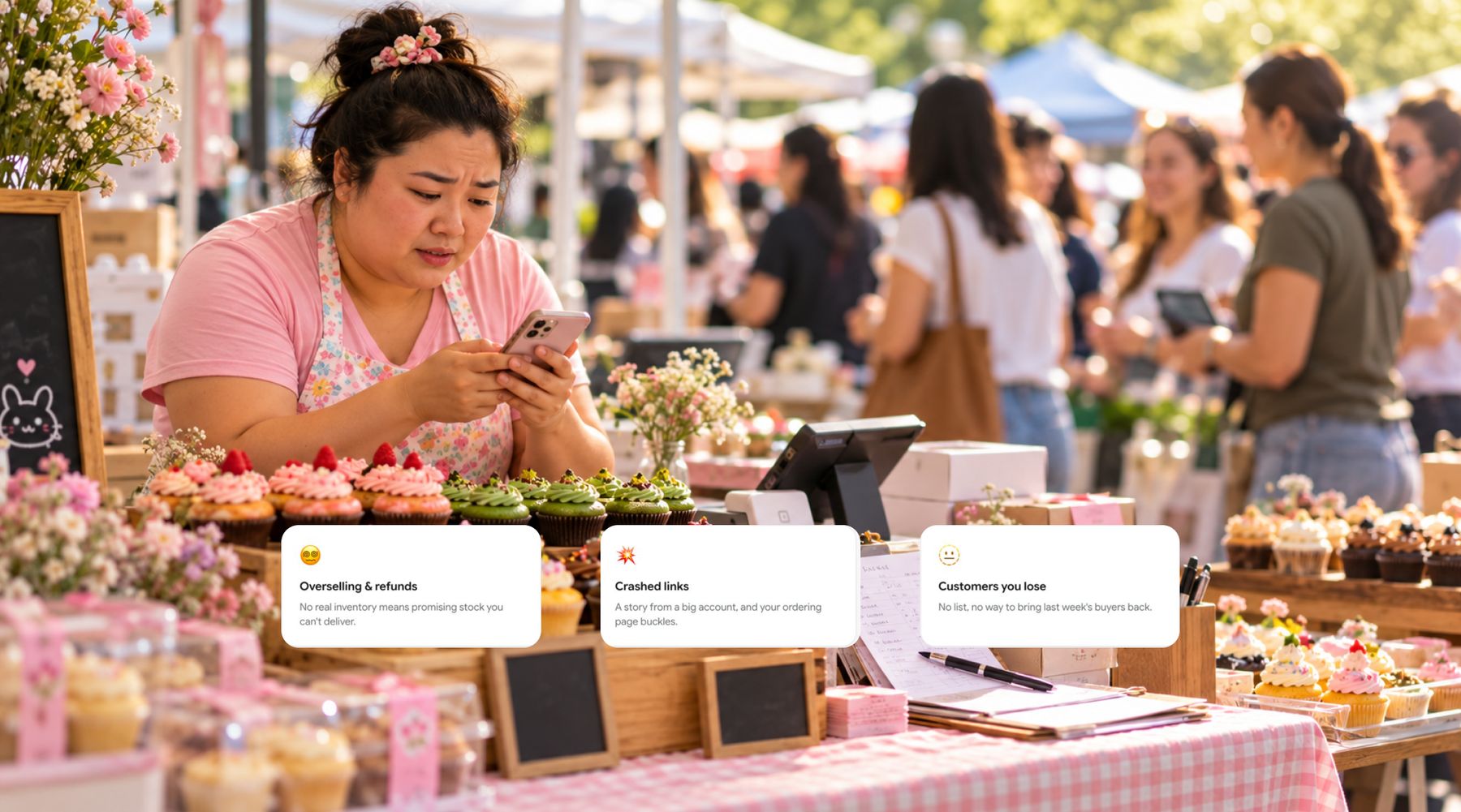
Your business runs on a dozen apps that don’t talk to each other.
Instagram for marketing. A link in bio for the catalogue. A spreadsheet for orders. A payment app. A group text for the waitlist. It works until a drop goes viral, and then it fails at the worst possible moment.
The Opportunity
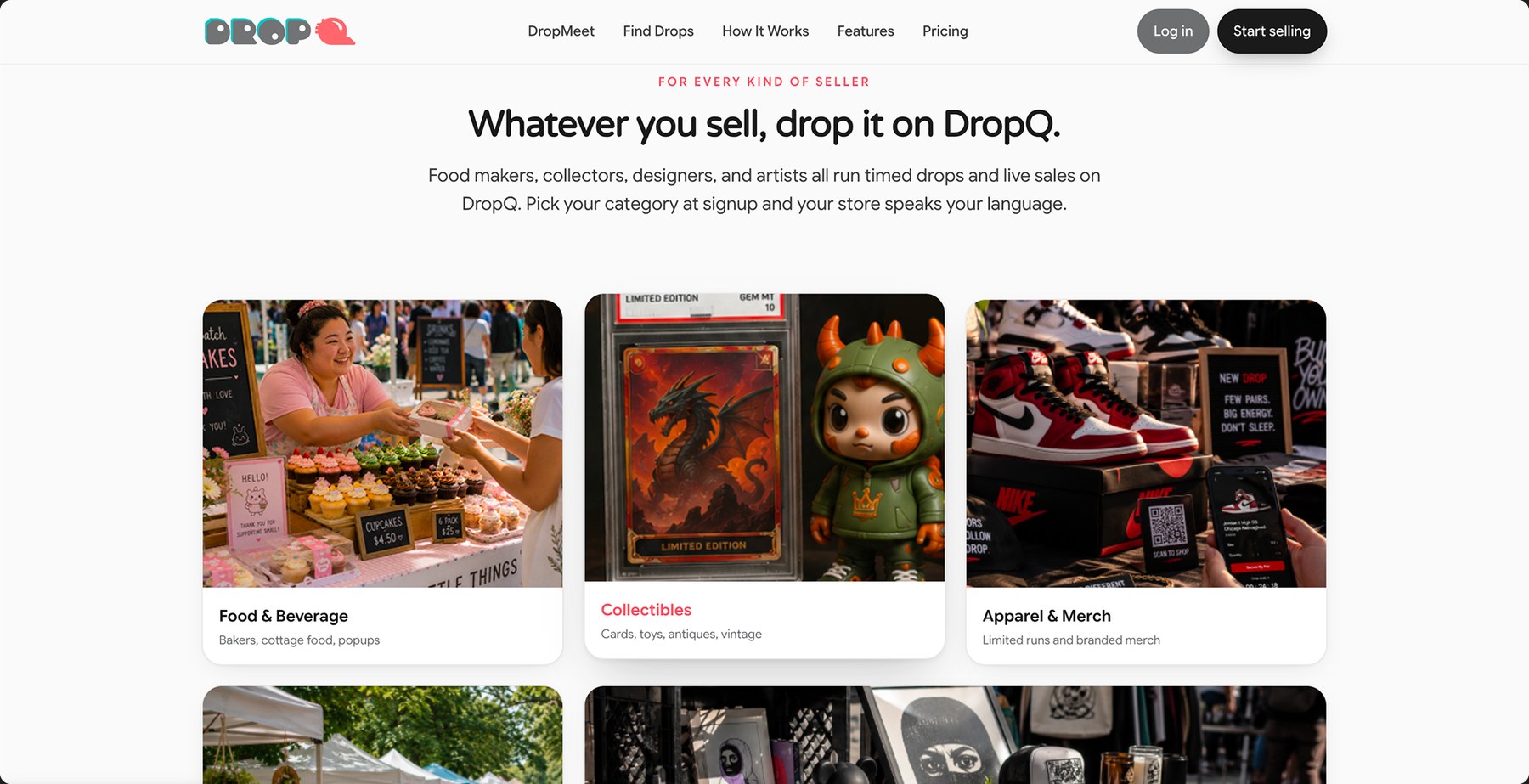
We set out to help cottage food vendors sell their goods, grow a following, and build a community with fellow vendors and customers.
What We Learned
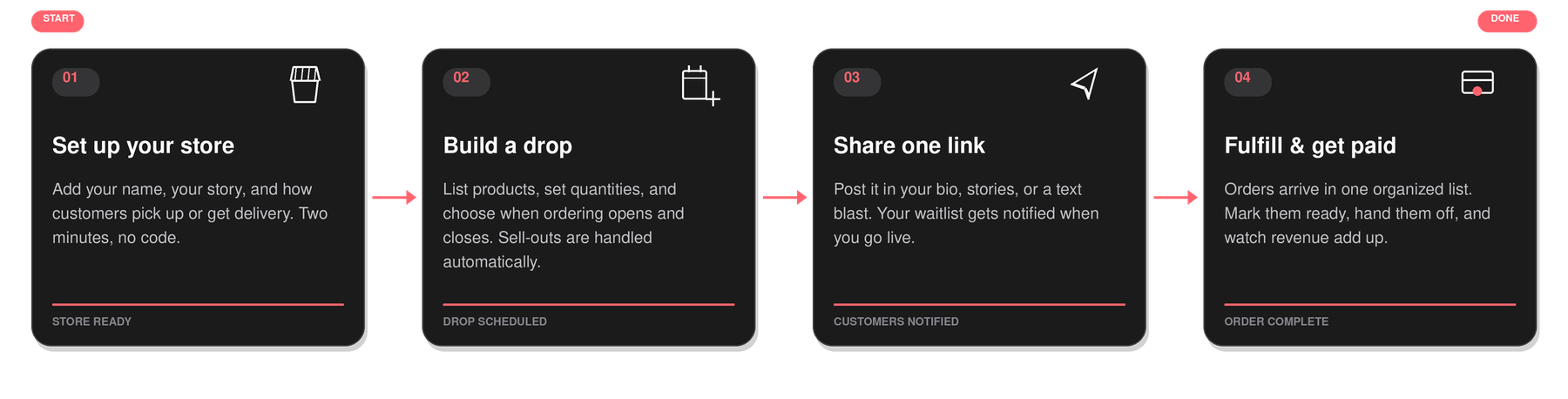
Our first drop worked, but it revealed a need for better communication between vendors and customers. We added a messaging stream so vendors could stay connected with customers and track every sale and new customer in one place.
The Direction
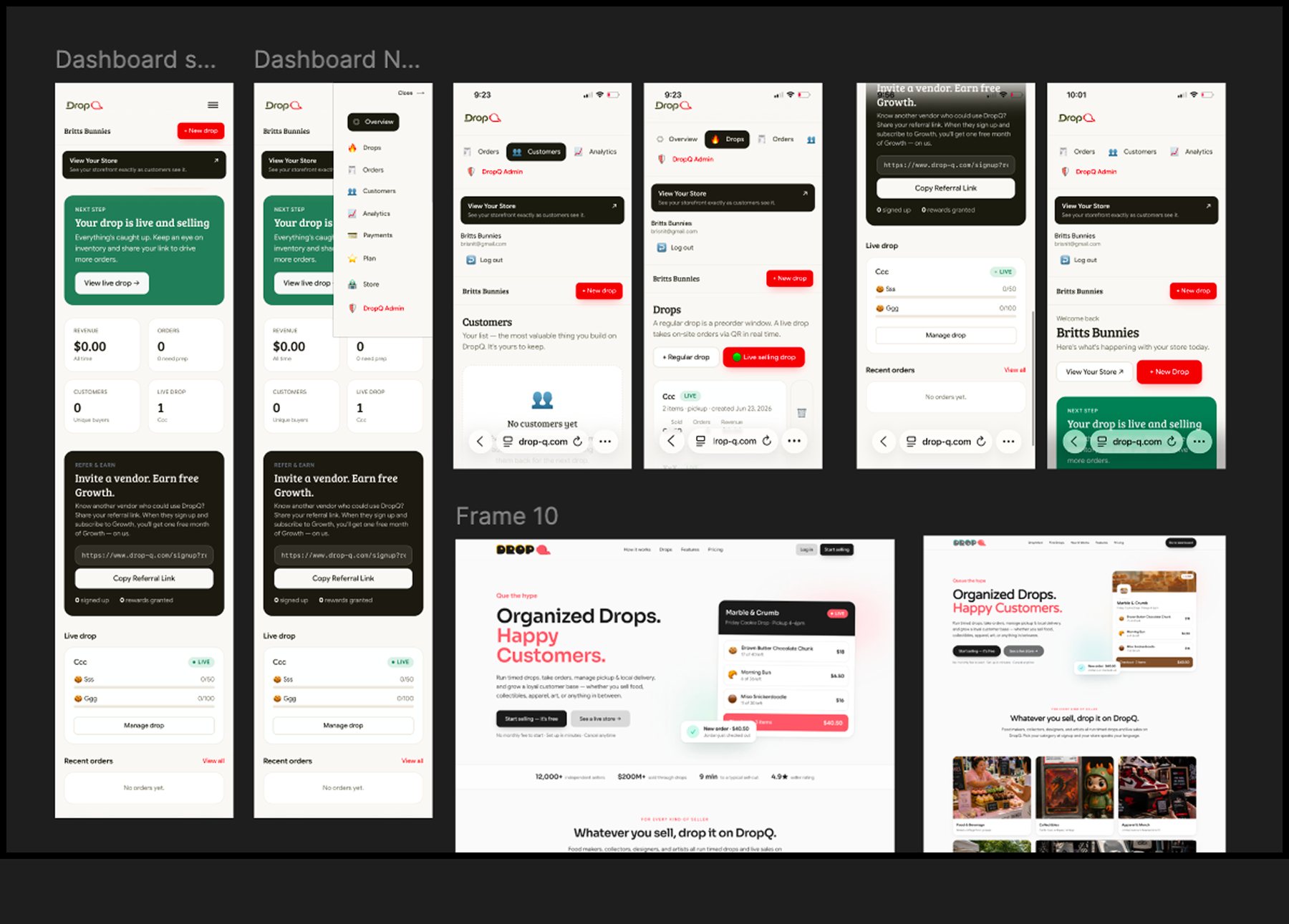
I designed and built the entire app with AI, using ChatGPT and Claude in VS Code. Screens I created in Figma guided the visual direction, while detailed, iterative conversations helped strengthen the backend. The project showed me how much AI can amplify a designer’s judgment, craft, and ability to bring an idea to life.
Designing the Experience
We refined the app through real-world testing: purchasing from multiple drops and speaking with vendors afterward. Those insights helped us simplify the buying journey and improve how vendors manage sales and communicate with customers.
The Visual System
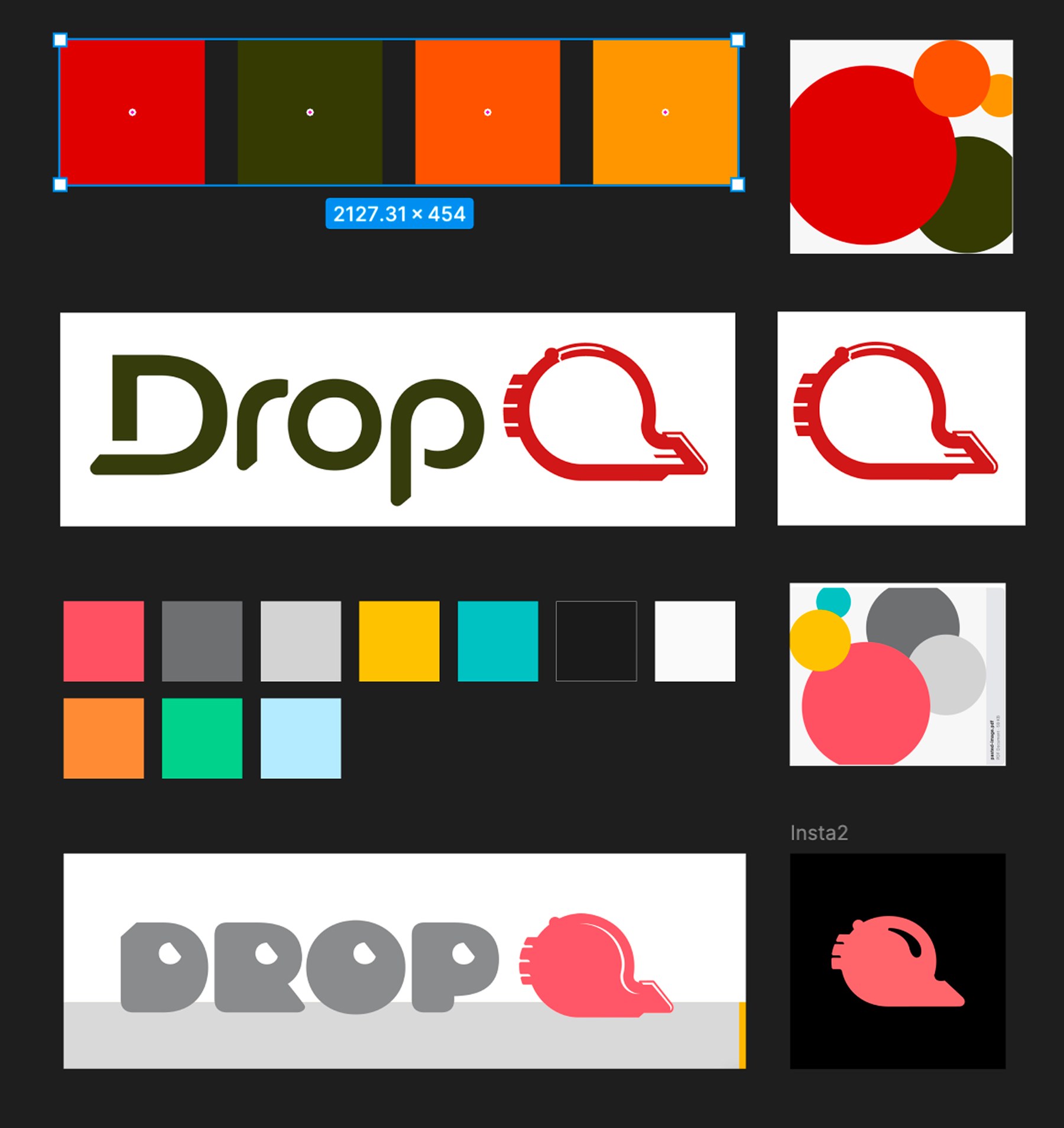
My partner brings a traditional graphic design background, and I gave him creative freedom to shape the color palette, typography, and logo.
The Final Experience
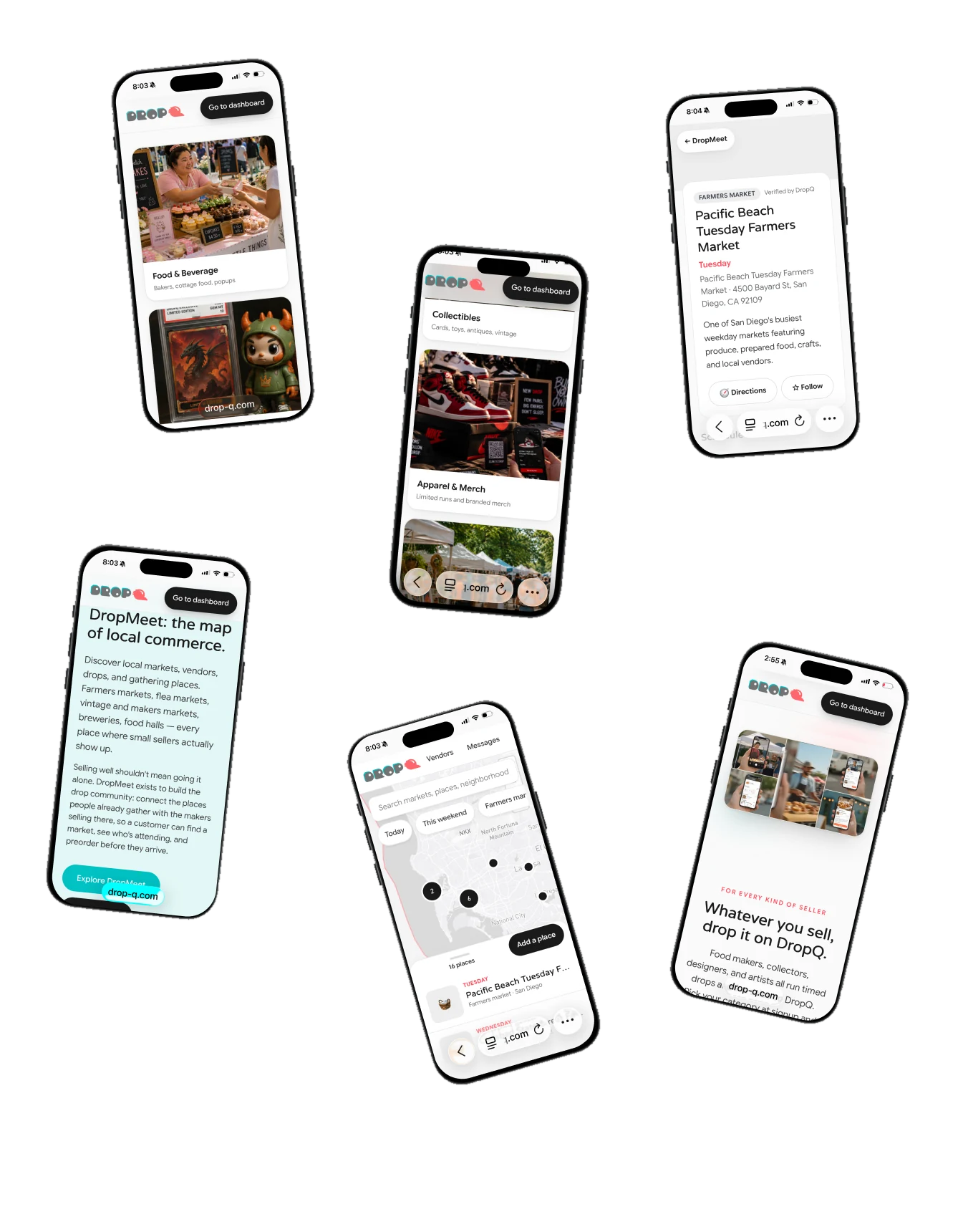
DropQ is live with seven vendors, and our go-to-market plan targets 100 by the end of 2026. Next, we’re launching in-person meetups to build community and grow participation among vendors and customers.
The Impact
We built DropQ for an underserved market, with growing enthusiasm from San Diego’s pop-up community. That early interest is helping shape the platform as we work toward broader adoption.
The Takeaway
Vendors are launching spontaneous drops on their own, an encouraging sign that the experience is easy to use.
What I led
- Product strategy. Chose which parts of a seller’s improvised stack the product would replace, and which it would leave alone.
- Experience and IA. Designed the buying journey and the seller’s dashboard, then simplified both against what real drops exposed.
- UI and visual direction. Designed the screens in Figma and set the direction; my partner, who comes from a traditional graphic design background, shaped the palette, typography and logo with creative freedom.
- Front-end build. Wrote the application front-end, using ChatGPT and Claude in VS Code, with iterative work on the backend alongside it.
- Validation. Bought from multiple drops and debriefed vendors afterwards, and fed what that exposed back into the product.
Shipped, and planned
DropQ is live. These are the parts that exist today, and the parts that do not yet.
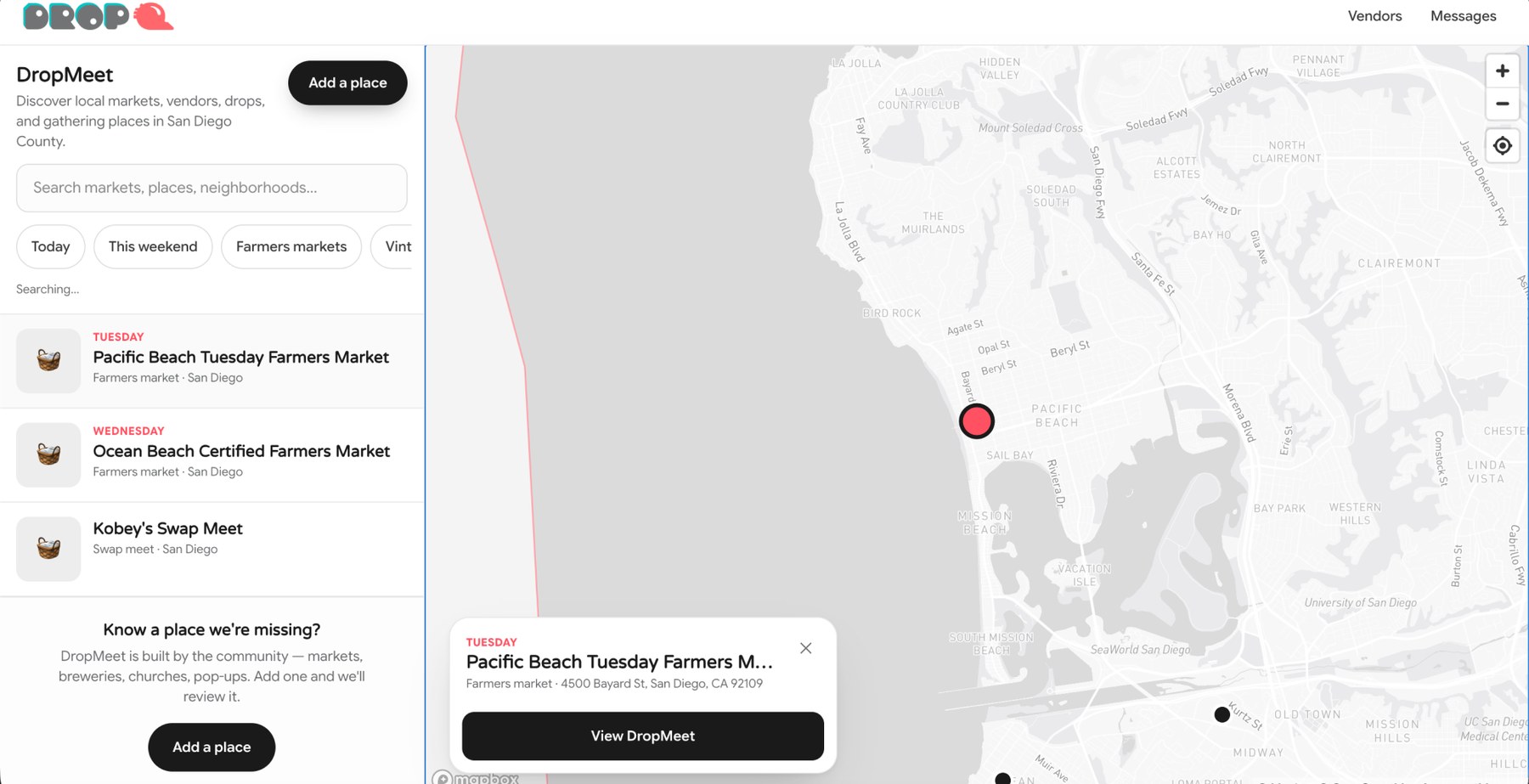
- Shipped. Timed drops, inventory that cannot oversell, an owned customer list, a vendor-to-customer messaging stream, the seller storefront, and DropMeet, the directory of local markets and pop-ups.
- Planned. In-person vendor meetups, and a go-to-market target of 100 vendors by the end of 2026. Seven vendors are live today.
Next project
NIPR
A licensing task that could mean fourteen open windows, rebuilt as one guided sequence.